

Structural Assessment Before You Renovate
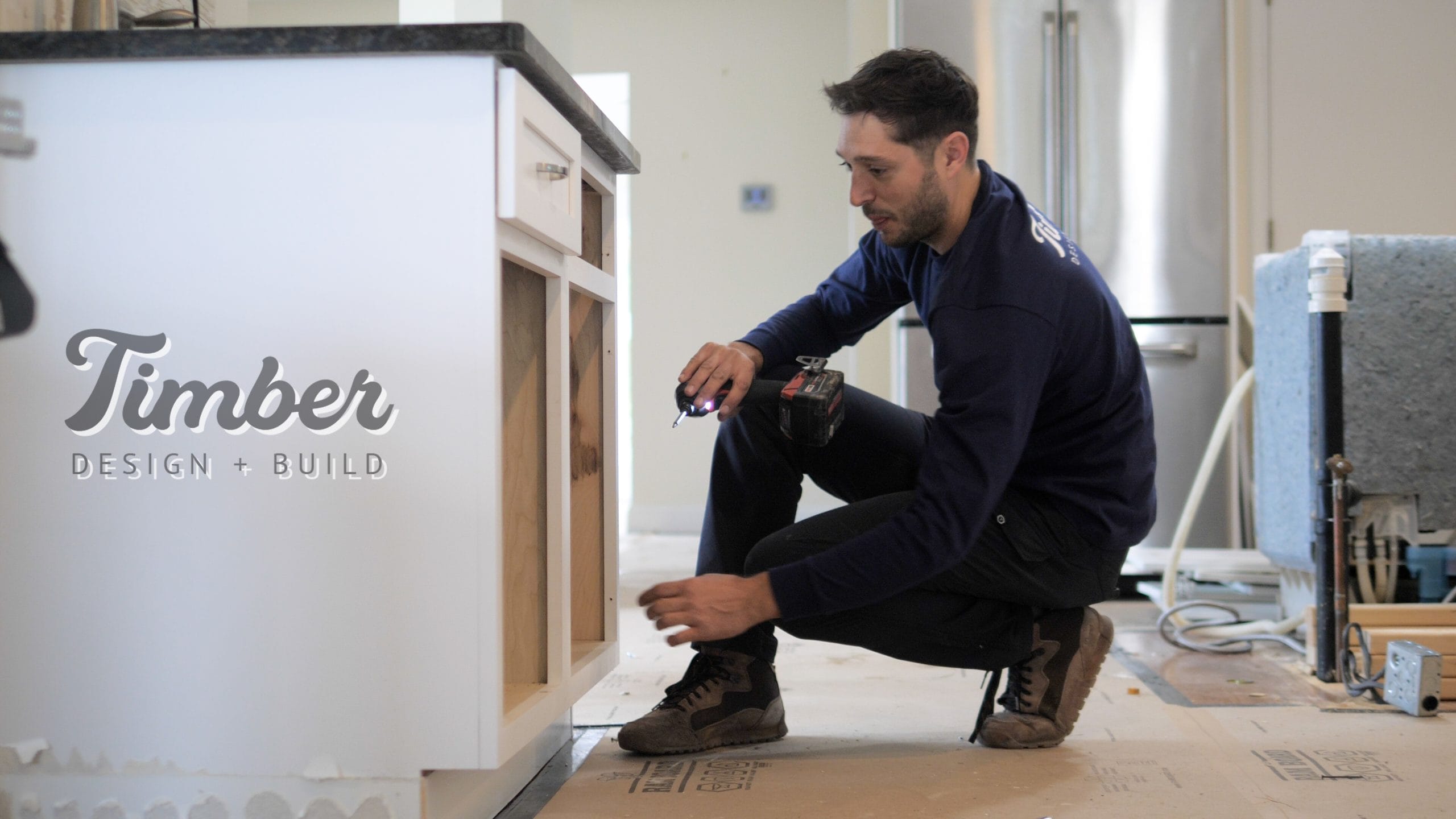
By Jeff Wiegmann, Co-Founder, Timber Design + Build
A structural assessment before renovation examines the condition of a home's foundation, framing, mechanical systems, moisture management, and building envelope. It's the single most important step in preventing budget surprises during a whole-house renovation. Without one, you're setting a budget based on assumptions about conditions you haven't verified — and those assumptions are frequently wrong in Hudson Valley homes built before 1970.
By Jeff Wiegmann, Licensed General Contractor, Co-Founder — Timber Design + BuildWhat a Structural Assessment Covers
A thorough pre-renovation assessment examines six systems. Each one can generate significant costs if problems are discovered during construction rather than before:
Foundation
Inspection of foundation walls, footings, and slab (if applicable) for cracks, settlement, moisture infiltration, and structural integrity. Hudson Valley homes built on stone foundations — common in Ulster County homes from the 1800s — require special attention. Parging deterioration, mortar loss, and water penetration through stone foundations are common findings. Remediation ranges from $5,000 for repointing to $50,000+ for foundation stabilization.
Framing
Assessment of floor joists, bearing walls, headers, beams, and roof structure. Common findings include undersized joists, notched or damaged structural members, termite damage, and rot from long-term moisture exposure. Historic homes with balloon framing require fire blocking if walls are to be opened. Joist sistering — adding new members alongside existing ones — costs $3,000–$15,000 depending on extent.
Electrical
Evaluation of service panel capacity, wiring type and condition, grounding, and code compliance. Knob-and-tube wiring in homes built before 1940 cannot remain in insulated walls or ceilings. A 60-amp or 100-amp service panel is inadequate for a modern renovation and requires upgrade to 200-amp. Complete rewiring: $25,000–$50,000 for a 2,000 square foot home.
Plumbing
Assessment of supply pipe material (galvanized steel, copper, PEX), drain pipe material (cast iron, ABS, PVC), water heater condition, and well/septic condition for rural properties. Galvanized supply pipes in pre-1970 homes corrode from the inside and reduce water pressure; replacement is recommended during any major renovation. Cast iron drain pipes have a lifespan of 50–75 years and may require replacement. Full repipe: $25,000–$60,000.
HVAC
Evaluation of heating and cooling systems, ductwork, insulation levels, and air sealing. Many Orange County and Dutchess County homes rely on boiler-based heating with no central air conditioning. Adding forced air or mini-split cooling during a renovation is a common upgrade. System replacement: $25,000–$60,000 depending on system type and home size.
Moisture and Envelope
Assessment of roof condition, window condition, exterior siding/masonry, drainage patterns, and evidence of past or active moisture problems. Moisture damage is the most destructive force in residential construction — more homes are damaged by water than by any other single cause. Identifying moisture pathways before renovation prevents rebuilding on top of existing problems.
Timber conducts thorough pre-renovation assessments as part of every preconstruction engagement
Call (845) 500-3002 to schedule a site visit.
Schedule AssessmentWho Should Perform the Assessment?
A pre-renovation structural assessment is different from a home inspection. Home inspectors provide a general overview; a pre-renovation assessment is performed by the contractor or a structural engineer and focuses specifically on systems that will be affected by the planned renovation. At Timber, our design-build team performs the assessment because the same people who evaluate the structure will design and build the renovation — there's no gap between what's found and how it's addressed.
How Assessment Findings Affect the Budget
Assessment findings fall into three categories: (1) Must-fix — issues that must be addressed as part of any renovation work (structural deficiencies, code violations, safety hazards). (2) Should-fix — systems nearing end of life that are most economical to address while walls are open. (3) Informational — conditions that affect design decisions but don't require immediate action. Understanding which findings fall into which category helps set a realistic budget with appropriate contingency.
When to Get a Structural Assessment
Before you set a budget. Before you hire a designer. Before you commit to buying a home you plan to renovate. The $500–$1,500 cost of a thorough assessment is minimal compared to the $20,000–$100,000+ cost of discovering structural or mechanical problems during construction. For homeowners buying a home with renovation plans, make the assessment a condition of your offer.
Know what you're working with before you commit
Timber's preconstruction assessment covers foundation, framing, mechanical, and envelope — everything that affects your renovation budget.
Start Your ProjectFrequently Asked Questions
How much does a pre-renovation structural assessment cost?$500–$1,500 for a contractor-level assessment. $2,000–$5,000 if a licensed structural engineer is involved (recommended for historic homes or homes with visible structural issues). At Timber, the assessment is typically included in the preconstruction agreement fee.
Is a structural assessment the same as a home inspection?No. A home inspection is a general overview for home purchases. A pre-renovation structural assessment is deeper, more specific, and focused on the systems that will be affected by the planned work. Home inspectors typically don't open walls, test individual circuits, or evaluate joist capacity — a pre-renovation assessment may include all of these depending on the planned scope.
What if the assessment reveals problems that make the renovation too expensive?Then you've made the best possible discovery at the best possible time — before committing to a construction contract. The assessment allows you to make an informed decision: proceed with a revised budget, reduce the renovation scope, phase the work over time, or decide not to renovate. All of these options are better than discovering the problems during construction.
By Jeff Wiegmann, Licensed General Contractor, Co-Founder — Timber Design + Build