How to Evaluate a Design-Build Firm Before Hiring One
By Jeff Wiegmann, Co-Founder, Timber Design + Build
Not every firm that calls itself "design-build" operates as one. The term has been adopted by general contractors who offer basic design assistance, by architects who manage construction, and by firms that genuinely integrate both disciplines under one roof. Evaluating a design-build firm requires looking beyond the label to the actual capabilities, process, and track record. This checklist covers what to assess before hiring.
By Jeff Wiegmann, Licensed General Contractor, Co-Founder — Timber Design + Build1. Dedicated Design Staff
The most important differentiator: does the firm have dedicated design professionals on staff? A real design-build firm employs designers, architects, or interior design professionals who produce construction drawings, 3D renderings, and material specifications. If the "design" is the GC sketching floor plans on graph paper or using a free online tool, it's a GC with a marketing label — not a design-build firm. Ask: Who does the design work? What are their qualifications? What software do they use?
2. Professional Design Software
Professional residential design requires professional software. Chief Architect, SoftPlan, or similar BIM-capable tools produce construction-grade output — dimensioned floor plans, wall elevations, 3D renderings, and material schedules. If a firm can't show you 3D renderings of past projects produced by their design team, their design capability is limited. Timber uses Chief Architect Premier for every project from bathroom renovations to custom homes.
3. Portfolio of Completed Projects
Ask to see completed projects where the firm managed both design and construction. Look for before-and-after photos, design renderings alongside finished photos, and evidence that the finished project matches the design. A firm with a strong design-build portfolio will have extensive project documentation. A firm that recently added "design-build" to their marketing will have a thin portfolio.
View Timber's portfolio of completed design-build projects
See our work or call (845) 500-3002 to discuss your project.
Schedule a Call4. Defined Process
A mature design-build firm has a defined process with named phases, clear deliverables, and client decision points. Ask: What does your process look like from first call to completion? What are the milestones? When do I make decisions? When do I sign contracts? A firm that can't clearly describe their process probably doesn't have one — and an undefined process leads to undefined outcomes.
5. Licensing and Insurance
In New York, general contractors are licensed at the county level. Verify the firm holds a current GC license in the county where your project is located — Ulster, Orange, Dutchess, or Sullivan County. Verify current general liability insurance ($1M minimum) and workers' compensation coverage. Ask for certificates of insurance — a legitimate contractor provides these without hesitation.
6. Self-Perform vs. Subcontract
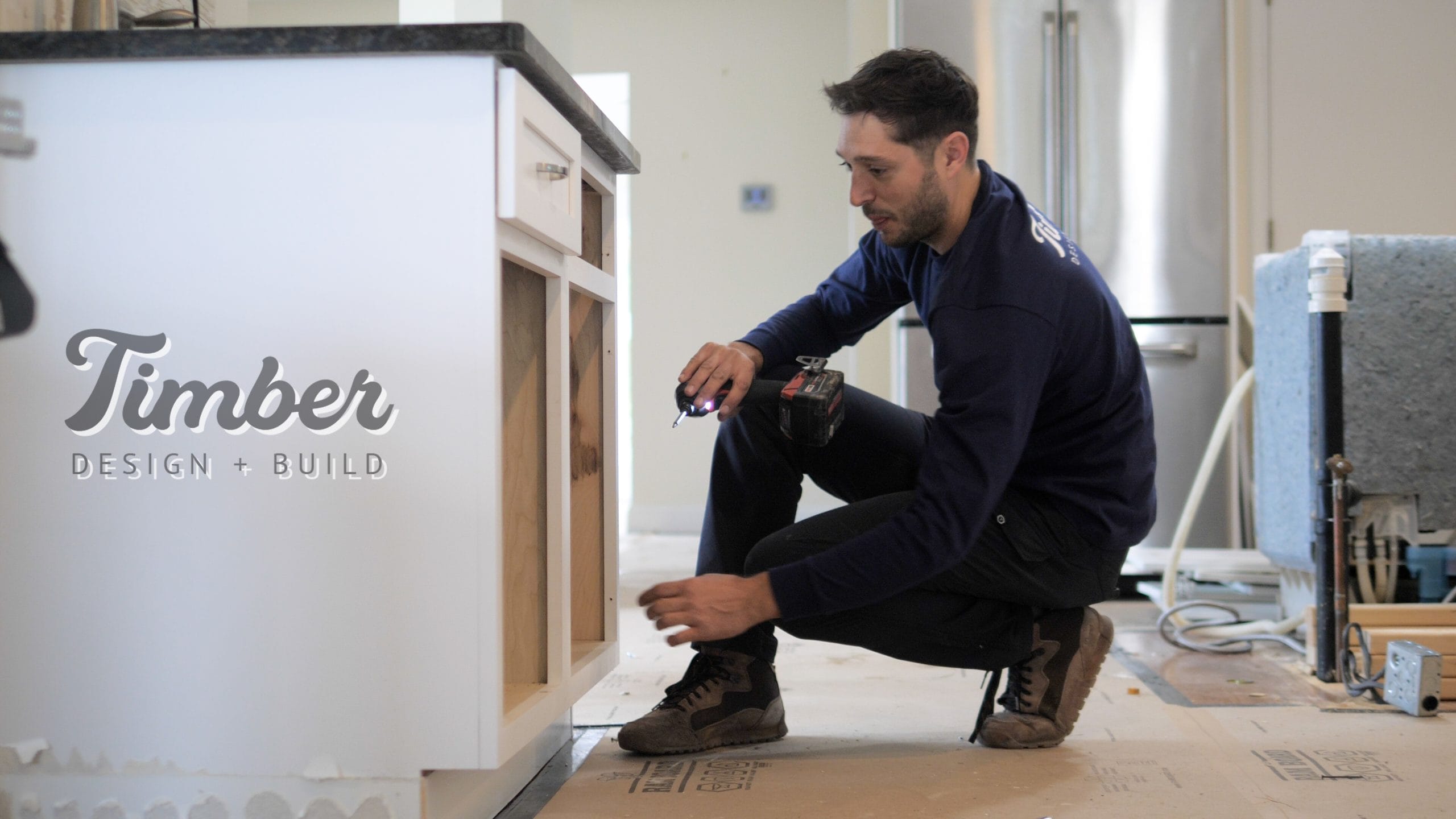
Ask what work the firm's own crew performs and what is subcontracted. A firm that self-performs critical work — framing, finish carpentry, millwork installation — has more control over quality and schedule than a firm that subcontracts everything. Timber's crew self-performs framing, rough carpentry, finish carpentry, and custom millwork. Licensed trades (electrical, plumbing, HVAC) are subcontracted to licensed specialists.
7. References and Reviews
Ask for references from recent clients — not from five years ago, but from projects completed within the last 12 months. Call those references. Ask: Did the project come in on budget? On time? Were there surprises? How was communication? Would you hire them again? Check Google Reviews and Houzz reviews for independent feedback. A firm with consistent 5-star reviews across multiple platforms has earned that reputation.
8. Cost Transparency
A legitimate design-build firm is transparent about costs. They explain the fee structure, the preconstruction agreement, and the construction contract type. They don't require a large deposit before any work is done. They provide detailed cost breakdowns. If a firm is evasive about costs or requires a substantial deposit before demonstrating any value, that's a warning sign.
Evaluating firms? Start with a 20-minute Zoom call with Jeff or Chris.
Camera on. No sales pitch. Just a conversation about your project and our process.
Schedule Your CallFrequently Asked Questions
How many design-build firms should I talk to before choosing one?Two to three is sufficient. Unlike the traditional model where you might get 4–6 bids from GCs, design-build selection is based on capability, process, and fit — not price alone. Meet with 2–3 firms, evaluate them against this checklist, and choose the one whose process, portfolio, and communication style match your expectations.
What's the biggest red flag when evaluating a design-build firm?No dedicated design staff. If the person doing the design is the same person who will be swinging a hammer on your job site, the design quality will be limited. A real design-build firm invests in design professionals who focus on design — not builders who also sketch plans when needed.
Should the design-build firm be local to my area?Yes. A local firm knows the building departments, the permit requirements, the subcontractor market, and the material suppliers in your area. They understand local construction costs and can provide accurate estimates. Timber serves the Hudson Valley — Ulster, Orange, and Dutchess Counties — and knows every building department in the region.
By Jeff Wiegmann, Licensed General Contractor, Co-Founder — Timber Design + Build