How the Design-Build Process Works at Timber
By Jeff Wiegmann, Co-Founder, Timber Design + Build
The design-build process at Timber follows eight defined phases — each with a clear deliverable, a client decision point, and a transition condition that must be met before moving forward. This structure exists because the most common source of project problems is ambiguity: unclear scope, undefined specifications, and unsigned agreements. Every phase at Timber ends with something concrete — a document, a drawing, or a decision — that both the homeowner and the team agree on before proceeding.
By Amanda Barton, Designer, and Jeff Wiegmann, Co-Founder — Timber Design + BuildPhase 1: First Call — 20 Minutes
Every Timber project begins with a camera-on Zoom call with Jeff or Chris. This is a conversation — not a sales call. The purpose: understand your project, share how we work, and determine whether there's a potential fit. We'll ask about the project type (new construction, renovation, kitchen, bathroom), location, timeline expectations, and budget range. You'll learn how design-build works, what our process looks like, and what the next step involves.
Phase 2: Site Visit — 1 to 2 Hours
For renovations, we visit the home to assess existing conditions. For new construction, we visit the site to evaluate terrain, access, utilities, and any site-specific considerations. The site visit produces a preliminary understanding of scope and an initial cost range. This is where Jeff or Chris identifies potential structural, mechanical, or site issues that will affect the project — the earlier these are identified, the more accurately we can plan.
Phase 3: Preconstruction Agreement
If there's a fit, we propose a preconstruction agreement — a paid engagement that covers the design phase. The preconstruction agreement defines the design scope, the fee, and the deliverables. This is a separate agreement from the construction contract. It allows the homeowner to invest in design with a clear understanding of what they'll receive — and no obligation to proceed with construction if the design or budget doesn't work out.
The preconstruction agreement protects both the homeowner and the builder
Clear scope. Defined fee. No obligation to proceed beyond design.
Schedule a CallPhase 4: Design Development
Amanda Barton leads design development using Chief Architect software. This phase produces floor plans, elevations, 3D renderings, and interior design specifications. Homeowners review the design in 3D — walking through their future kitchen, seeing cabinet layouts from multiple angles, evaluating material combinations in context. The design phase typically involves 2–4 rounds of revisions before the design is finalized. Every design decision is reviewed by Jeff or Chris for buildability and cost impact.
Phase 5: Budget Finalization
Once the design is approved, the construction team produces a detailed cost estimate. This is not a rough range — it's a line-item budget tied to the approved design, specifications, and material selections. The homeowner reviews the budget, and any adjustments to scope or specification happen now — before the construction contract is signed. This phase exists specifically to prevent the budget surprises that plague traditionally delivered projects. Read our guide on design-build cost structure for details.
Phase 6: Construction Contract
The construction contract is a fixed-scope agreement based on the approved design and budget. It defines the work, the price, the payment schedule, the timeline, and the conditions for change orders. The homeowner signs the construction contract knowing exactly what they're getting and what they're paying. There is no bidding phase — the price was developed alongside the design.
Phase 7: Construction
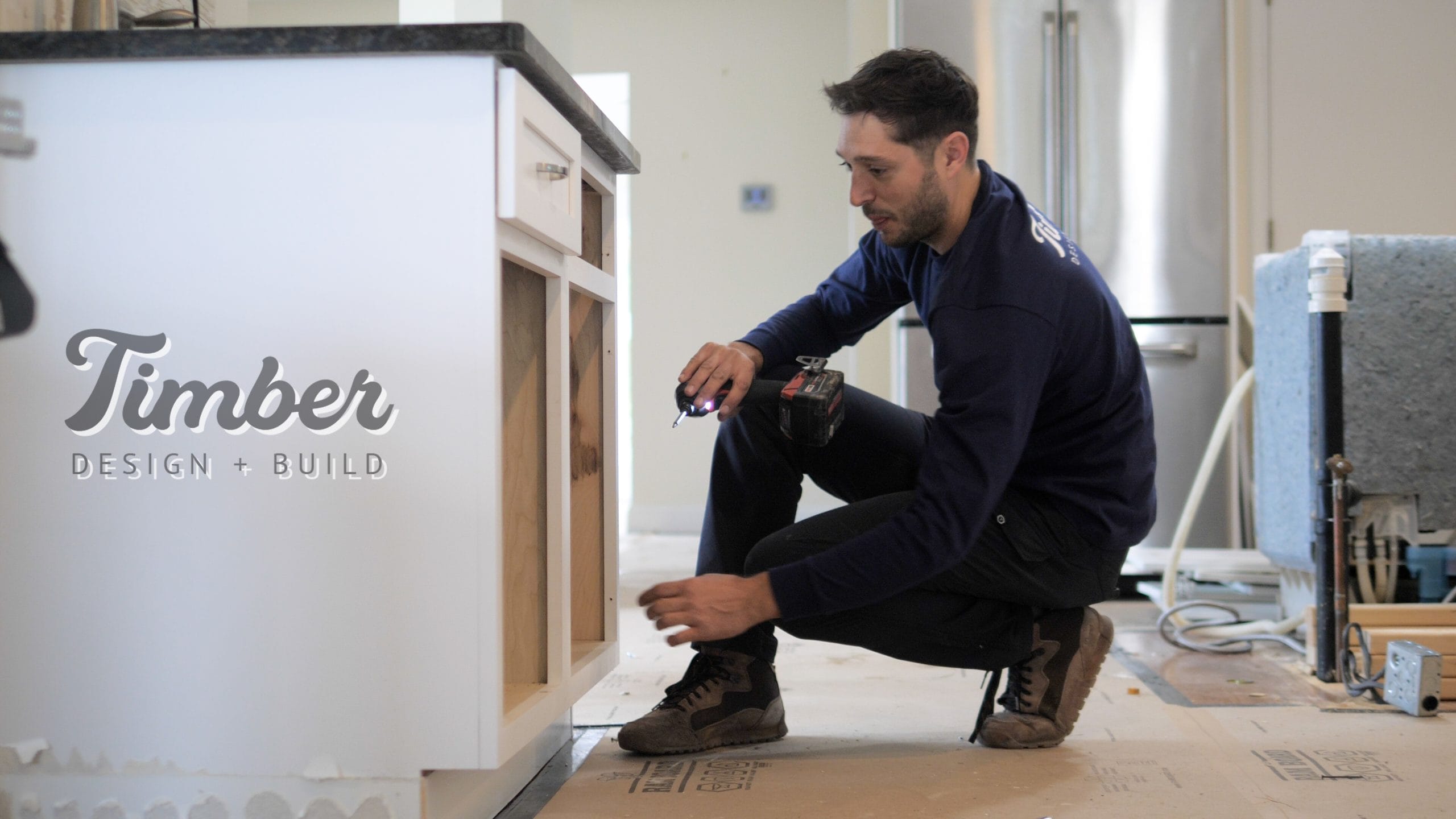
Construction follows the approved plans. Timber's crew self-performs the critical work — framing, finish carpentry, and millwork installation. Subcontractors handle licensed trades: electrical, plumbing, HVAC. Weekly progress updates keep the homeowner informed. The project manager coordinates all trades, manages the schedule, and ensures quality matches the approved specifications. Homeowners across Ulster County, Orange County, and Dutchess County receive the same level of communication and oversight.
Phase 8: Completion and Handover
Punch list walkthrough, final corrections, cleaning, and handover. The project isn't done until every item on the punch list is resolved. Final building inspection, certificate of occupancy (for new construction), and documentation of all warranties, manuals, and maintenance requirements. Timber stays involved through this entire phase — the project is complete when the homeowner says it's complete.
Ready to start with a 20-minute Zoom call?
Jeff or Chris — camera on. No sales pitch. Just a conversation about your project.
Schedule Your CallFrequently Asked Questions
How long does the entire design-build process take?From first call to move-in: 8–18 months depending on project scope. A kitchen renovation: 4–7 months total. A whole-house renovation: 9–16 months. A custom home: 12–18 months. The design and preconstruction phases (Phases 1–6) typically take 2–4 months; construction duration depends on scope.
What if I don't like the design?Design development includes 2–4 rounds of revisions. The 3D renderings allow you to see exactly what the finished project will look like before construction begins. If the design direction isn't working, we adjust. The preconstruction agreement covers the design phase separately — if we can't arrive at a design you love, you're not locked into a construction contract.
Can I bring my own architect's plans to Timber?Yes. If you have completed architectural plans, Timber can review them for buildability, provide a construction cost estimate, and build the project. In this case, we function more like a general contractor — though we may recommend design modifications if we identify constructability issues or opportunities to improve the plan.
By Amanda Barton, Designer, and Jeff Wiegmann, Co-Founder — Timber Design + Build