

Custom Built-Ins vs. Furniture: Why Built-In Millwork Changes How a Room Feels
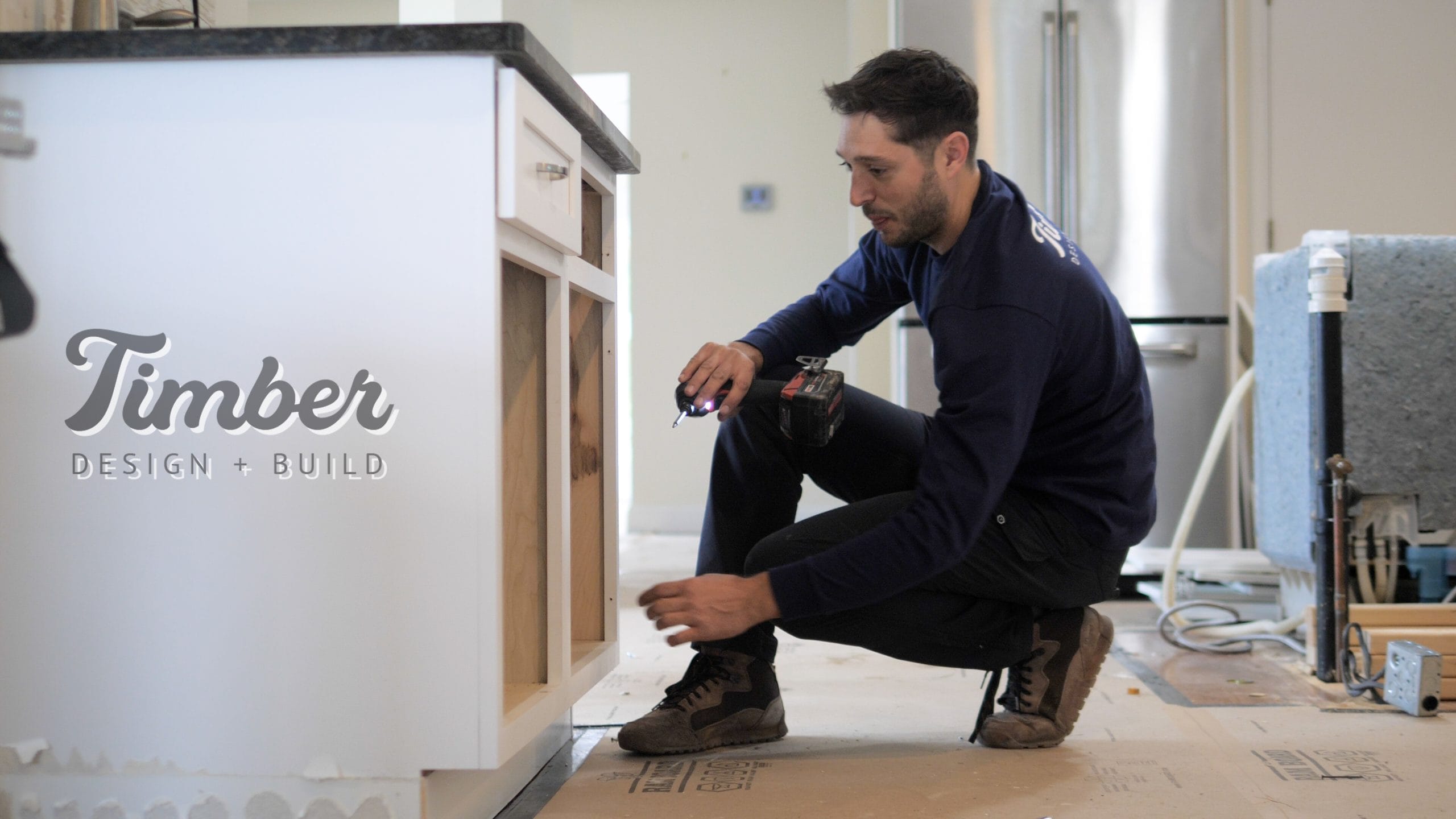
By Jeff Wiegmann, Co-Founder, Timber Design + Build
Custom Millwork — The most common question about built-in millwork is whether it justifies the cost compared to purchasing furniture. The honest answer: built-ins and furniture are solving different problems. A sofa can be moved; a built-in bookcase cannot. Furniture is flexible; built-ins are permanent. The question is not which is better — it is which is right for your specific room, your specific storage need, and your relationship with the space. Built-ins win the comparison in specific situations. Here is when they win and why.
By Jeff Wiegmann, Licensed General Contractor, Co-Founder — Timber Design + BuildWhen Built-Ins Win the Comparison
- Alcoves, recesses, and non-standard wall dimensions — built-ins fill these perfectly; furniture creates gaps
- Storage maximization — built-ins use the full floor-to-ceiling height; furniture rarely does
- Architectural integration — built-ins become part of the room's architecture; furniture sits in front of it
- Perceived home value — built-ins increase appraised value; furniture does not
- Flanking a fireplace — the classic built-in application, impossible to replicate with furniture
- Home office productivity — a fully integrated work wall eliminates furniture gaps and cable management issues
What Built-Ins Do That Furniture Cannot
The defining characteristic of a built-in is that it is designed for and fits its specific location precisely. A built-in bookcase flanking a fireplace fills the alcove from wall to wall, from floor to ceiling, with doors, shelves, and proportions that relate directly to the fireplace and to the room. The shelves are exactly the right depth for books and objects in that specific space. The base cabinets provide concealed storage. The crown molding at the top transitions to the room's ceiling profile. It is not a bookcase placed in a room — it is part of the room.
Furniture in the same location is always a compromise. It is close to the wall but not touching it on both sides. It is almost the right height but not quite to the ceiling. It cannot match the fireplace's proportions because it was designed independently of them. The result is a room where the furniture looks like furniture in a room, rather than a room that was designed as a complete environment.
Ready to discuss your project?
Jeff or Chris will walk your site and give you an honest assessment. Call (845) 500-3002.
Start Your ProjectThe Storage Efficiency of Built-Ins
Floor-to-ceiling built-ins in a 10-foot room use the full height of the wall. A standard bookcase — 72–84 inches — uses the bottom 60–70% of the same wall. The storage difference in a 12-foot-wide by 10-foot-tall built-in wall vs. furniture in the same space is roughly 35–40%. In a room where storage is a meaningful need — a home office, a library, a mudroom — this efficiency difference is significant.
Built-ins also eliminate the floor-to-furniture gap that accumulates dust and is difficult to clean. The base of a floor-to-ceiling built-in is either a toe kick (like a kitchen cabinet) or a base molding that meets the floor cleanly. There is no space between the bottom shelf and the floor for objects to fall into and for dust to collect.
When Furniture Wins
Furniture wins when: the room's configuration changes over time (a room that is a guest room now and a nursery later — built-in storage for one function may not serve the other), the home is a rental property where built-ins add cost without guaranteed ROI, the specific item needed is available in a quality that exceeds what custom production would provide at the price point (a solid walnut dining table from a craft furniture maker may represent better value than a table from a general millwork shop), or when flexibility is explicitly the priority — the ability to take the piece when you move, reconfigure the room, or change the function of the space.
Fun fact: A 2024 Zillow analysis of comparable home sales found that homes with custom built-in millwork in living rooms, home offices, and primary suites sold at a premium of 3–8% over comparable homes without built-ins. The premium was highest for homes in the $600,000–$1,200,000 price range in the Northeast — which includes the Hudson Valley's primary market.
Related Reading
- Custom Kitchen Cabinetry Timber Millwork
- Home Office Built Ins
- Custom Mudroom Design
- Built In Bookshelves Library Walls
- Back to Custom Millwork
Frequently Asked Questions
Do built-ins add to a home's appraised value?Yes — permanently installed, built-in millwork is classified as a fixture (real property) rather than personal property, and appraisers include it in the assessed value of the home. The value contribution depends on the quality, condition, and appropriateness of the millwork for the home's overall specification level. High-quality built-ins in a well-maintained home contribute measurably to appraised value. Built-ins that are dated, damaged, or inconsistent with the home's quality level contribute less.
How do I decide between open shelving and closed cabinets in a built-in?Open shelves display what is on them — which is an asset if the items displayed are curated and attractive, and a liability if they are not. Most effective built-in designs include a combination: upper shelves open for display of books and objects, lower cabinets with doors for concealed storage of items that do not benefit from display. The proportion of open to closed depends on the room's function and the homeowner's organizational habits.
Can built-ins be removed without damaging the walls?Not easily, and not without visible evidence of where they were. Built-ins are screwed to wall studs, may be scribed to irregular walls, and typically involve painted-in place trim at the perimeter that will damage the wall surface when removed. This is why the decision to install built-ins should be made with the assumption that they are permanent. They can be removed by a skilled carpenter without catastrophic wall damage, but the walls will require patching and refinishing.
Planning a project in the Hudson Valley?
Call (845) 500-3002 or schedule a consultation.
Start Your ProjectBy Jeff Wiegmann, Licensed General Contractor — Timber Design + Build