

What Is Preconstruction? How Smart Projects Start Before a Shovel Hits the Ground
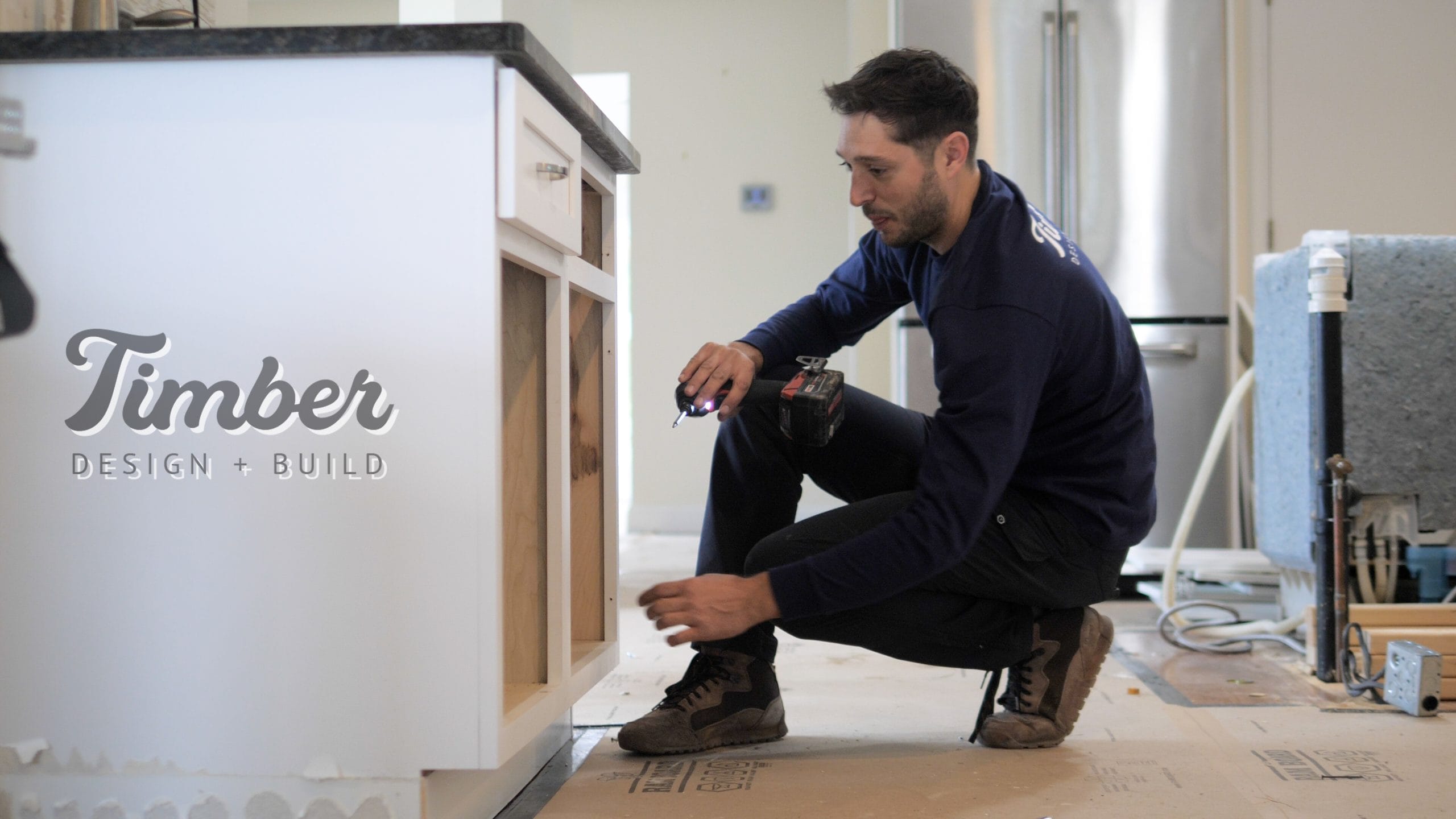
By Jeff Wiegmann, Co-Founder, Timber Design + Build
Preconstruction Services — Most homeowners think a construction project starts when work begins. The best construction projects start months earlier — in a preconstruction phase where the design is completed, the cost is estimated accurately, the schedule is developed, the permits are applied for, and the materials are selected. Preconstruction is the work done before physical construction that determines whether physical construction runs predictably or expensively. Here is what the preconstruction phase includes and why it matters.
By Jeff Wiegmann, Licensed General Contractor, Co-Founder — Timber Design + BuildWhat Preconstruction Accomplishes
- Converts a general idea ("we want to renovate our kitchen") into a defined scope with a real cost
- Identifies site conditions that will affect cost before the estimate is set
- Completes design before the budget is committed — eliminates post-commitment design changes
- Establishes a realistic schedule that accounts for permitting, material lead times, and trade availability
- Makes material selections in advance so no construction sequence waits on an undecided selection
- Produces a contract with known scope, not one full of allowances that will change
Why Most Projects Skip Adequate Preconstruction
Preconstruction takes time, costs money, and requires decisions before construction creates urgency. Homeowners who are eager to begin construction push past the planning phase to get to the part where visible progress happens. Contractors who price competitively at the proposal stage sometimes scope projects loosely to keep the initial number low, knowing that the full scope will emerge during construction as change orders.
The result: a project that starts with a contract number and a handshake and ends with a significantly higher final cost, a longer timeline than anticipated, and a homeowner who is frustrated by the gap between the initial estimate and the outcome.
Adequate preconstruction eliminates most of this gap. It takes longer to get to the construction contract. The upfront investment in design, site assessment, and estimating is real. The payoff is a project that finishes near the agreed-upon number and timeline — because the number and timeline were based on complete information.
Ready to discuss your project?
Jeff or Chris will walk your site and give you an honest assessment. Call (845) 500-3002.
Start Your ProjectThe Five Pillars of Good Preconstruction
Design completeness: the design must be sufficiently complete that the construction contract can be accurately priced. A set of schematic drawings is not sufficient for accurate pricing — materials are not selected, structural details are not resolved, MEP (mechanical, electrical, plumbing) routing is not defined. Construction documents that are 90–100% complete before pricing produces the most accurate estimates.
Site knowledge: the site conditions that will affect cost must be known before the estimate is set. For new construction: subsurface investigation, utility availability, septic feasibility, and site access. For renovation: the existing building conditions at the specific locations where construction will occur. Estimating without site knowledge requires assumptions that will either be confirmed or become change orders.
Material selections: every allowance in a contract is a cost that has not been decided. The actual cost of the allowance item — if it exceeds the allowance — is a change order. Completing material selections during preconstruction converts allowances to actual costs, eliminating this source of budget variation.
Schedule realism: the schedule must account for permitting timeline (which is outside the contractor's control), material lead times (some items require 8–16 weeks from order to delivery), and trade availability (skilled trades in the Hudson Valley are in demand and are scheduled weeks to months in advance). A schedule that ignores these realities produces missed dates that create cascading delays.
Contract clarity: the construction contract should define scope, exclusions, allowances, payment schedule, change order process, and schedule commitments with enough specificity that both parties have the same understanding of what is included and what is not. Ambiguous contracts create disputes.
What Preconstruction Costs and What It Returns
Preconstruction services for a renovation project typically cost $5,000–$20,000 depending on scope and depth. This is real money — but compared to the cost of change orders generated by inadequate preconstruction on a $400,000 renovation, it is inexpensive insurance. Change orders on renovation projects average 5–15% of contract value in the industry. A 10% change order rate on a $400,000 project is $40,000. Preconstruction investment that prevents that rate from reaching 10% returns 2–8x its cost.
Fun fact: The Construction Industry Institute at the University of Texas found that projects with strong preconstruction planning (defined as completing at least 30% of detailed design before the construction contract is signed) finish an average of 22% under budget compared to projects with minimal preconstruction. The correlation between preconstruction investment and final project performance is one of the most consistent findings in construction research.
Related Reading
- Site Assessment New Construction
- How To Read Construction Estimate
- Preconstruction Design Process
- Budgeting For Contingency Construction
- Back to Preconstruction Services
Frequently Asked Questions
What is the difference between preconstruction and design?Design produces drawings — the visual representation of what will be built. Preconstruction is broader: it includes design, but also site assessment, estimating, schedule development, permit strategy, and material selection. Design is one component of preconstruction. Good preconstruction cannot happen without complete design; complete design alone is not sufficient for good preconstruction.
Can we hire someone just to do preconstruction without committing to construction?Yes. Timber offers standalone preconstruction engagements where the deliverable is a fully developed plan, cost estimate, and schedule — without a commitment to the construction contract. Owners use standalone preconstruction to validate project feasibility, develop an accurate budget before committing financing, or prepare a project for competitive construction bids. The preconstruction fee is a professional service charge not contingent on the project proceeding.
How long does preconstruction take?Preconstruction for a kitchen or bathroom renovation: 3–6 weeks. For a whole-house renovation or addition: 6–12 weeks. For new construction: 8–16 weeks from first meeting to ready-to-permit construction documents. The design decision velocity of the owner is the primary variable — the process moves as fast as selections are made and designs are approved.
Planning a project in the Hudson Valley?
Call (845) 500-3002 or schedule a consultation.
Start Your ProjectBy Jeff Wiegmann, Licensed General Contractor — Timber Design + Build