

Walk-In Shower Design: What to Know Before You Build One
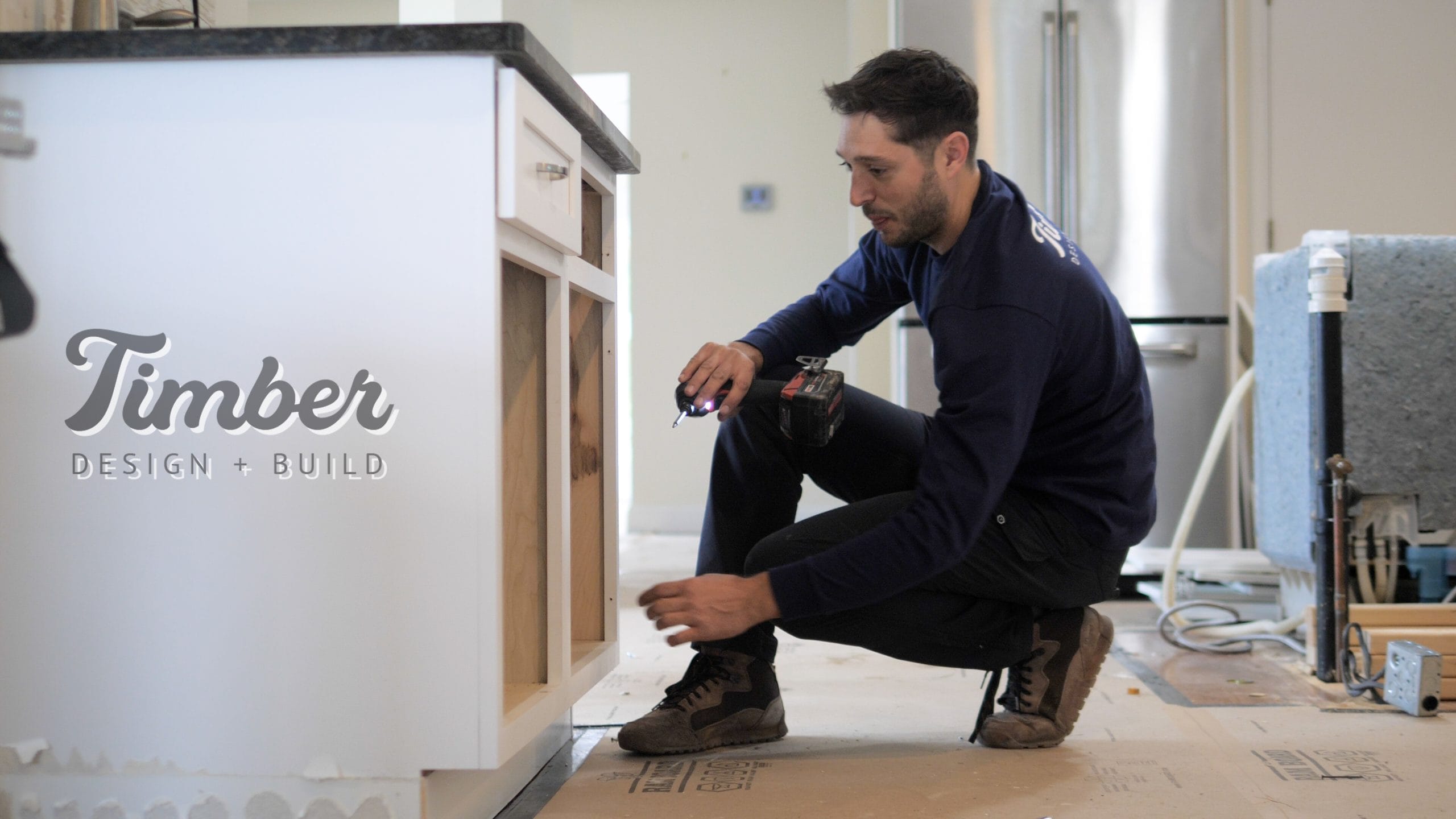
By Jeff Wiegmann, Co-Founder, Timber Design + Build
Converting a tub-shower combo to a dedicated walk-in shower is the most requested bathroom renovation in the Hudson Valley. It is also the renovation with the highest rate of mid-project surprises — unexpected plumbing configurations, inadequate structural blocking for grab bars and shower heads, and waterproofing failures on poorly built showers that were tiled over rather than properly remediated. Here is what to understand before you start. Timber Design + Build builds walk-in showers with proper waterproofing as standard practice.
Walk-In Shower Planning Checklist
- — Minimum size: 36"×48" — practical minimum: 48"×60" for comfort
- — Waterproofing membrane is required — not optional — behind all tile in the shower
- — Shower drain must be low-point of the shower floor — requires proper slope in all tile
- — Linear drain option allows large-format floor tile with single-direction slope
- — Frameless glass enclosure requires structural blocking in the adjacent wall — plan this in framing
- — Steam shower requires full enclosure, sealed ceiling, steam generator, and correct ventilation
- — Grab bars (ADA compliant) require blocking in walls — install blocking during construction even if bars are not installed now
Timber builds walk-in showers with proper waterproofing as standard practice
Call (845) 500-3002 or schedule a consultation.
Start Your ProjectWaterproofing: The Foundation of Every Shower
The tile on the walls and floor of a shower is not waterproof by itself. Grout is not waterproof. Standard tile adhesive mortar is not waterproof. Water penetrates through grout joints and reaches the substrate — the cement board, the framing, and the wall structure behind it — every time the shower is used. Without a continuous waterproofing membrane between the tile and the substrate, moisture accumulates behind the tile and causes tile failure, mold growth, and structural damage over years.
Timber uses sheet membrane waterproofing systems (Schluter Kerdi or equivalent) applied to all shower walls and the floor pan before any tile adhesive is applied. The membrane is bonded to the substrate and sealed at all corners and penetrations (shower head, valve, niche edges) to create a continuous waterproof layer. Seams are overlapped and embedded in unmodified thin-set. Corners receive fabric reinforcement bonded into the membrane.
This waterproofing system costs approximately $800–$1,500 in material and labor for a standard shower. It is the most important money spent in a bathroom renovation and the step most commonly skipped by contractors who are cutting cost or cutting corners.
The most common cause of bathroom renovation failure — tile cracking, grout crumbling, musty odor behind walls — is waterproofing failure, not tile quality or installation error. A shower tiled on top of improper waterproofing will show symptoms within 3–7 years. A properly waterproofed shower will perform for 20–30 years before requiring renovation.
Drain Type and Tile Size
The shower drain location determines tile layout options. A traditional center drain requires the shower floor to slope to the center from all four sides — a four-way slope that creates challenges for large-format tile installation (large tiles cannot flex to accommodate the slope without cracking). Small mosaic tile handles a four-way slope well; large-format tile (12×24 or larger) requires a linear drain.
A linear drain runs along one wall of the shower — typically the far wall from the door. The floor slopes in a single direction toward the linear drain, which accommodates large-format floor tile without the complexity of a four-way slope. Linear drains are more expensive than center drains ($400–$800 for the drain itself vs. $80–$150 for a standard center drain) but allow the most flexibility in floor tile selection. Timber discusses drain type, tile size, and floor configuration at the design stage — not after the tile is ordered.
Drain, tile size, and floor configuration — resolved in design, not during construction
Call (845) 500-3002 or schedule a consultation.
Start Your ProjectFrameless Glass Enclosure
A frameless glass shower enclosure — a single panel or hinged door of 3/8-inch or 1/2-inch tempered glass with minimal metal hardware — is the standard specification for quality primary suite shower renovations in Ulster County, Dutchess County, and throughout the Hudson Valley. The frameless enclosure creates a visual continuity that allows the tile to be the design element, not the frame.
Frameless glass requires structural support: the wall where the glass panel attaches must have structural blocking installed during framing — 2×10 or doubled 2×6 blocking behind the finish tile — to provide a solid anchor for the glass clips and hinges. This blocking cannot be added after the walls are tiled without removing tile. Plan for it during the framing phase of the renovation. Frameless glass enclosures for a standard primary suite shower run $3,000–$8,000 depending on size, glass thickness, and hardware finish (matte black, brushed nickel, polished chrome, unlacquered brass). Read our complete renovation process guide for the full construction sequence.
Steam Shower Considerations
A steam shower is a fully enclosed shower that generates steam from a generator unit (typically wall-mounted outside the shower in an accessible cabinet) piped into the shower through a small steam head. A steam shower requires a complete enclosure — no open sides, a door that seals, and a sloped ceiling to prevent condensation from dripping on users. The ceiling should slope at least 2 inches per foot toward a wall.
The steam generator requires a dedicated 240V electrical circuit and a cold water supply line. Generator sizing is based on shower volume — undersized generators do not produce adequate steam in the specified time. Timber sizes steam generators based on the specific shower dimensions and ceiling height of each project. Steam showers add $4,000–$8,000 to the renovation cost for the generator, electrical, plumbing, and ceiling modification.
Frequently Asked Questions
How long does it take to build a walk-in shower?The shower portion of a bathroom renovation typically takes 2–3 weeks of active construction — demolition, waterproofing, tile, glass installation. Glass lead time from fabrication (custom-sized frameless panels are cut to order) is typically 2–3 weeks from measurement. Measurement cannot happen until tile is complete and the exact opening dimensions are confirmed.
Should we include a shower bench?A bench in a walk-in shower is one of the most consistently appreciated features in primary suite bathrooms. It serves as a seating surface during showering, a surface for shaving, and a foot-rest. It adds approximately 18 inches of depth to the shower footprint — plan for it in the shower size calculation. A bench requires blocking in the wall where it attaches, waterproofing over the bench surface before tile, and proper slope on the bench top so water does not pool.
What is the difference between a steam shower and a sauna?A steam shower uses moist heat generated from water vapor — humidity approaches 100% at temperatures of 110–120°F. A sauna uses dry heat at much higher temperatures — 150–195°F — with very low humidity. They are different experiences with different health effects and very different construction requirements. A steam shower is a wet environment requiring full bathroom-grade waterproofing and ventilation. A sauna is a dry environment requiring a different construction approach entirely. Timber builds steam showers; custom sauna construction is a separate specialty.
---
By Jeff Wiegmann, Licensed General Contractor, Co-Founder — Timber Design + Build